
Which PEX Connection Is Best? Push-to-Connect, Press, Expansion, and Crimp
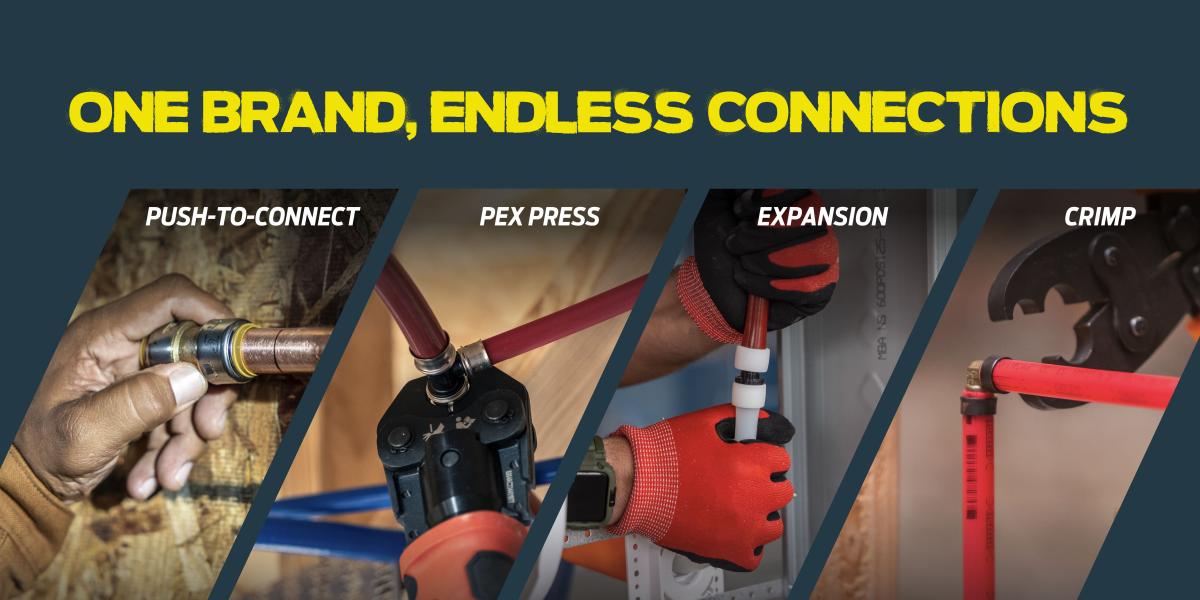
Choosing the right approach for your rough-in doesn’t have to be difficult. If you’re looking to speed up installation, minimize costs, or enhance overall quality, SharkBite offers a complete PEX ecosystem to meet your needs. From PEX press and crimp to expansion and push-to-connect, discover the pros and cons of each method.
Overview
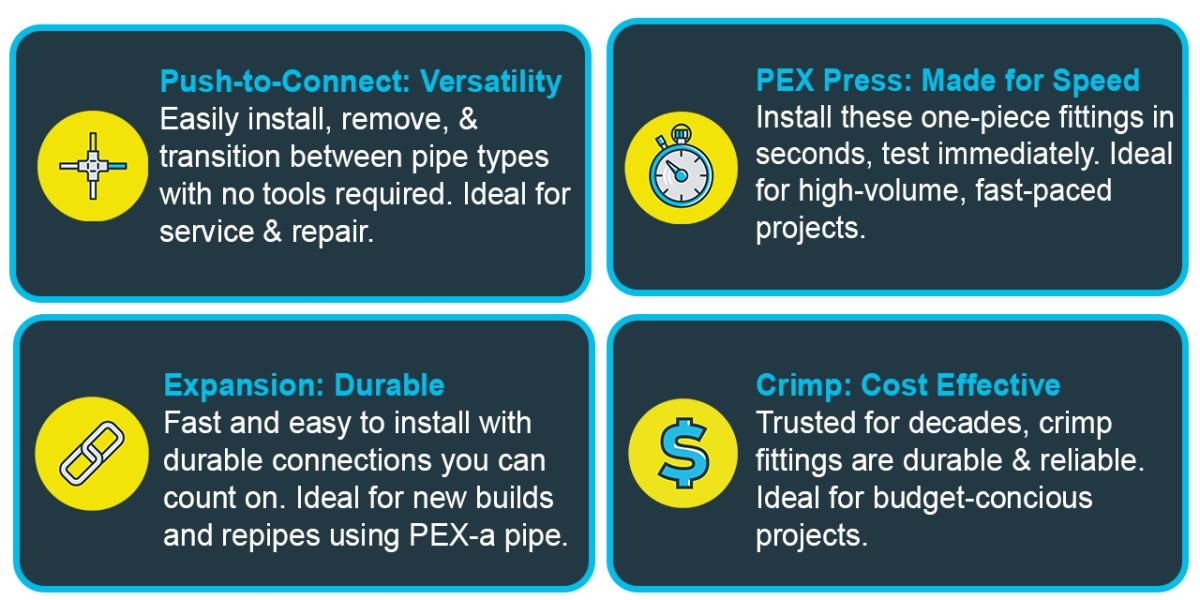
Consider the pros and cons of each PEX fitting system before choosing the right one for your plumbing project. Read below for more information on the pros, cons, and the best use cases of each SharkBite PEX system.
Push‑to‑Connect
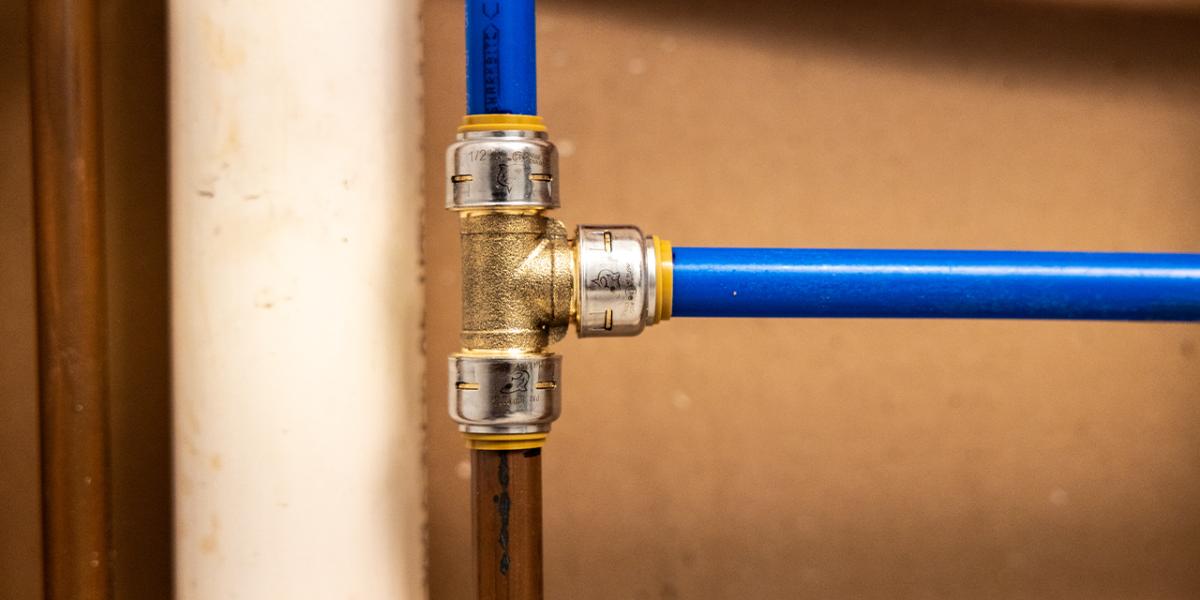
Pros: No special tools or extra parts, saves time, can transition to multiple pipe types, requires no calibration, removable, and can be tested immediately.
Cons: Higher material costs.
Best for: Service and repair, remodels, emergency fixes, and situations where speed and tool free installation are needed.
Push‑to‑Connect fittings are designed for maximum convenience. Installation involves simply cutting the pipe square and pushing it into the fitting until it seats. Internal stainless steel teeth grip the pipe while an O‑ring creates a watertight seal, with no soldering, crimping, or pressing required.
One of the biggest advantages of push‑to‑connect technology is compatibility. These fittings work with PEX-a, PEX-b, copper, and CPVC, making them especially useful for repairs, pipe transitions, and tight spaces where tools are hard to use. Fittings can also be removed if needed, adding flexibility for maintenance or modifications.
The SharkBite Max system is the next generation of brass push-to-connect fittings from SharkBite. A new stainless-steel collar adds double the strength and durability. It also has a pressure rating of 400 psi, which is double the pressure of our first-generation fittings.
Learn More: SharkBite Max
PEX Press
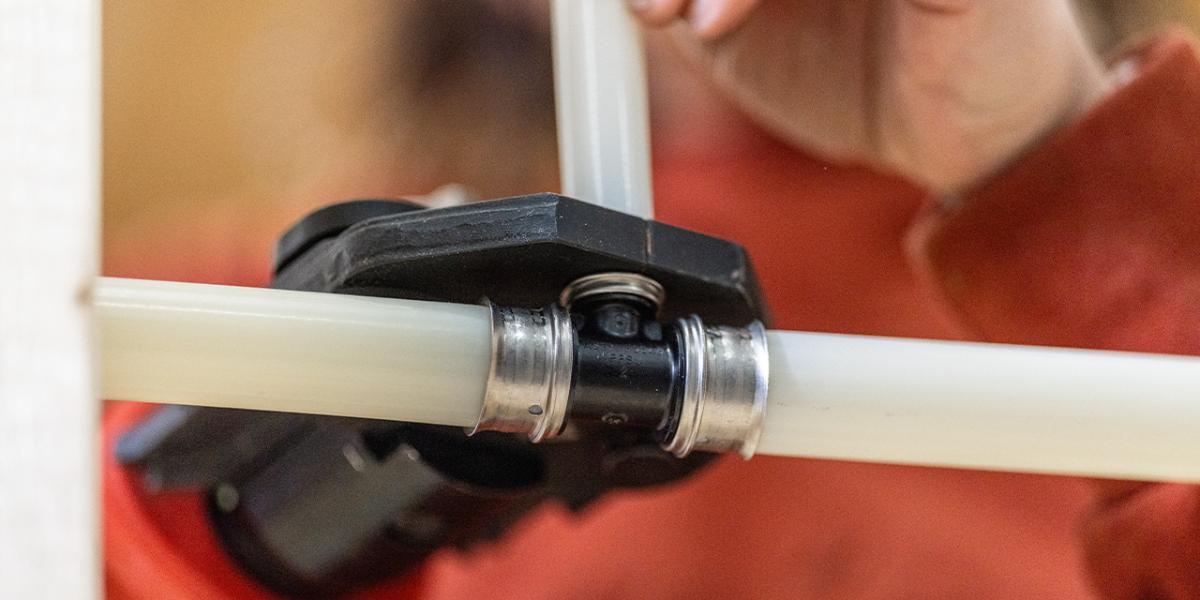
Pros: Faster installs with fewer steps and more consistent connections.
Cons: Cannot be disconnected after installation and requires a tool.
Best for: Professional installations, commercial work, and projects where speed, consistency, and immediate pressure testing matter most.
Each fitting includes pipe insertion windows and an integrated tool locator, allowing you to confirm that the pipe is fully inserted and properly pressed before moving on. Once pressed, the connection can be pressure tested immediately, helping crews complete inspections faster.
Compatible with PEX‑a or PEX‑b tubing, they work with commonly used press tools with jaws that meet ASTM F3347 and F3348 standards so installers don’t need proprietary tools. This flexibility makes PEX Press especially ideal as a single solution across multiple PEX systems.
Read More: Introducing SharkBite PEX Press
Expansion
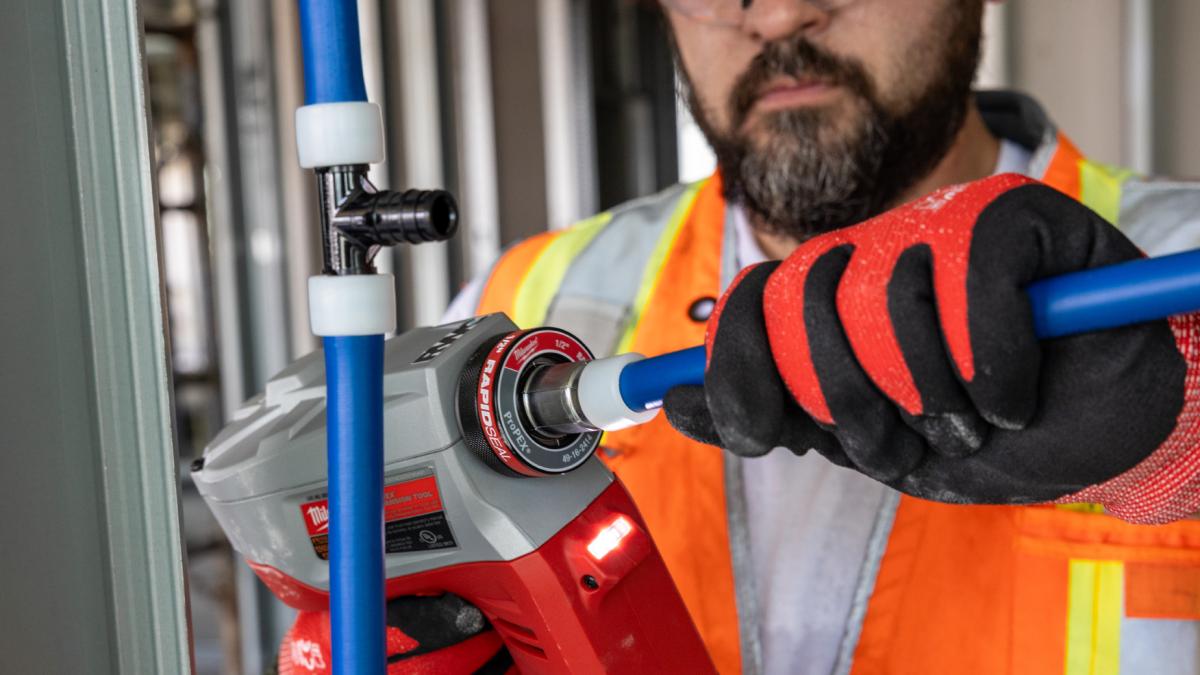
Pros: Easy installs and full-flow performance.
Cons: Tool required, needs time for setting before pressure testing, only use with PEX-a pipe.
Best for: New builds or full repipes using PEX‑a.
PEX Expansion uses an expansion tool to expand the pipe before inserting the fitting. As the PEX material contracts, it forms a tight seal around the fitting.
This method is limited to PEX‑a tubing, which has the flexibility required for expansion connections. One advantage of expansion systems is that the fitting’s internal diameter is closer to that of the pipe, which can help maintain flow rates. However, expansion tools are specific to this method. It also requires additional time for the pipe to contract before pressure testing.
Learn More: Plumbers Use SharkBite PEX Pipe and Expansion Fittings for New Construction Build
Crimp
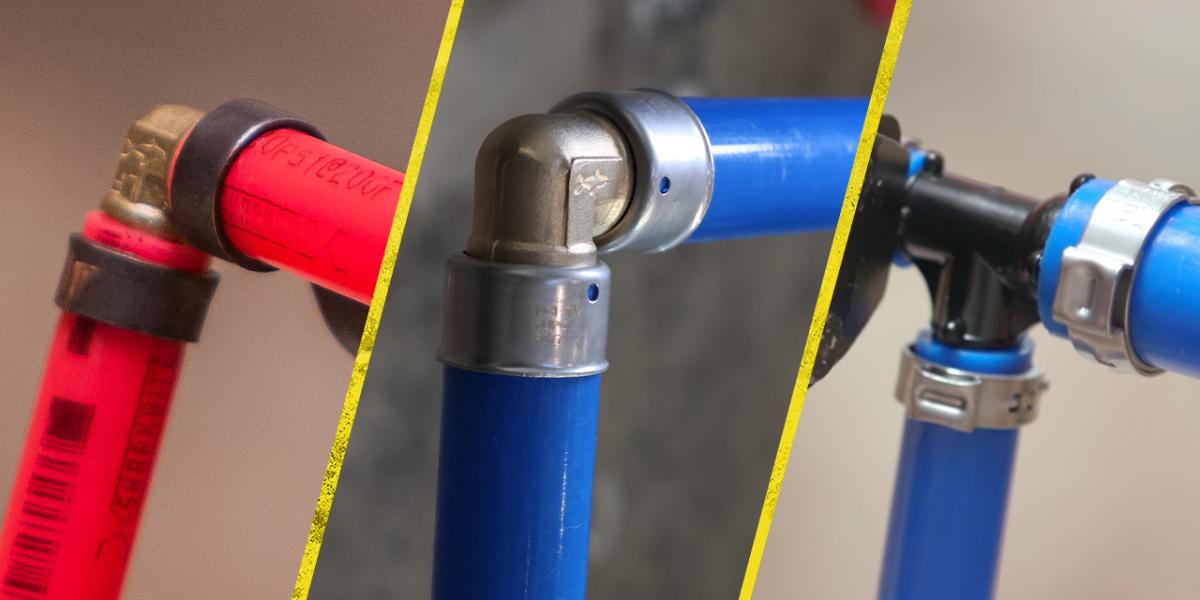
Pros: Broad range of options, durable, lower material cost.
Cons: Tools and multiple parts required, must be calibrated.
Best for: Budget conscious projects, traditional residential plumbing, and installers who already own crimp tools.
PEX Crimp is one of the most widely used PEX connection methods and has been trusted in residential plumbing for decades. It relies on a crimp tool that compresses a crimp ring around the pipe and fitting. Once installed, the connection is typically verified using a go/no‑go gauge to ensure proper compression.
Crimp fittings can be used with PEX-a or PEX‑b tubing, and the method is well understood across the plumbing trade, making it easy to train crews and source materials. It also can be used with crimp or clamp (cinch) rings so you can choose the one that’s best for you.
However, the process involves multiple steps and loose components, which can slow installation compared to newer methods.
SharkBite PEX Fittings Comparison Chart
Use the chart below for a quick side-by-side comparison of all four SharkBite PEX fitting systems. Scroll to see the entire chart.
| SharkBite | Crimp | Expansion | PEX Press | Max Push-to-Connect |
|---|---|---|---|---|
| Maximum Pressure Rating | 200 PSI | 160 PSI | 160 PSI | 400 PSI |
| Maximum Temperature Rating | 160°F | 200°F | 200°F | 200°F |
| Sizes offered 1/2 in. through 2 in. | ✅ | ✅ | ✅ | ✅ |
| Direct burial approved for poly fittings (Brass fittings must be wrapped before burial) | ✅ (Poly Only) | ✅ (Poly Only) | ✅ (Poly Only) | ❌ |
| No separate rings or sleeves required | ❌ | ❌ | ✅ | ✅ |
| Speed of Install | Medium | Medium | Fast | Fast |
| Able to pressure test immediately after install | ✅ | ❌ | ✅ | ✅ |
| Compatible with PEX-a and PEX-b Pipe | ✅ | ❌ (PEX-a Only) | ✅ | ✅ |
| Visual indicator that shows pipe is fully inserted | ❌ | ❌ | ✅ | ❌ |
| Able to use one tool with different sets of jaws to work on multiple systems | ✅ | ❌ | ✅ | N/A |
| So special tool required | ❌ | ❌ | ❌ | ✅ |
| Works on pipe materials other than PEX, like copper and CPVC | ❌ | ❌ | ❌ | ✅ |
| Warranty | 25 Year System | 25 Year System | 25 Year System | 25 Year System |